Restricted Use Pesticide Usage: Molokaʻi
Hoʻolehua-Kualapuʻu
Executive Summary (2020 - 2021)
Analysis of Hawaiʻi Department of Agriculture and Biosecurity Restricted Use Pesticide (RUP) data for Molokaʻi in 2020 and 2021 demonstrates the continued use of highly hazardous pesticides near the residential areas and community centers of Hoʻolehua and Kualapuʻu, with overlapping applications of neurotoxic insecticides, herbicides, and insect growth regulators. Across both years, communities face exposure to multiple chemical classes, including carbamates, organophosphates, pyrethroids, and persistent herbicides, highlighting ongoing health risks and environmental concerns.
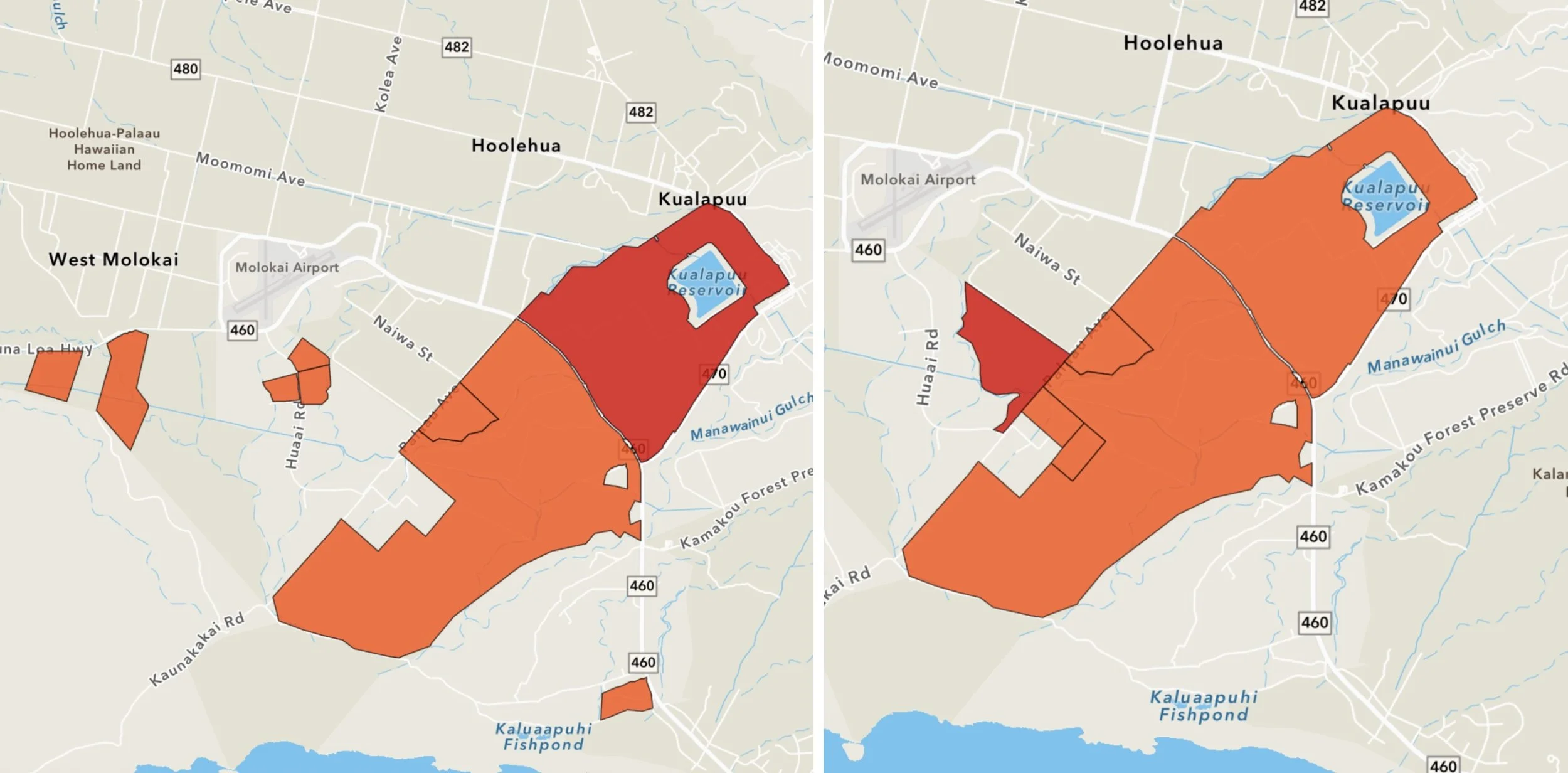
2020 & 2021
Key Findings
1. Persistent use of highly hazardous pesticides
Paraquat dichloride: 12 lbs (2020) → 163 lbs (2021) — extreme acute toxicity, no antidote, linked to Parkinson’s disease. Banned in 70 countries.
Methomyl: 8 lbs (2020) → 86 lbs (2021) — acute neurotoxicity, cholinesterase inhibition
Cyantraniliprole, Cyprodinil, Fludioxonil, Lambda- & Zeta-cypermethrin, S-Metolachlor — persistent, neurotoxic, and toxic to aquatic life
2. Neurotoxic burden near schools
Carbamates and organophosphates repeatedly applied
Children are highly vulnerable to neurological, respiratory, and developmental harms
Cumulative exposure risks are unaddressed under current regulations
3. Heavy use of synthetic pyrethroids and ecological toxicity
Multiple pyrethroids applied concurrently
Extremely toxic to fish, invertebrates, and pollinators
Persistent in sediments; concurrent use increases localized aquatic toxicity hotspots
4. Ongoing exposure to chemical mixtures
Real-world exposure includes overlapping applications of insecticides, herbicides, fungicides, and growth regulators
Evidence shows mixtures amplify:
Neurodevelopmental harm
Endocrine disruption
Chronic disease risk
Ecological damage
Schools and Communities at Risk
Pesticide residues travel miles from application sites into schoolyards, homes, water catchments, and air. Chronic exposure threatens children’s developing bodies, contributing to:
Brain development impacts
Respiratory harm and asthma risk
Childhood cancer susceptibility
Hormonal/endocrine interference
There are five schools within 1 mile of RUP applications (2020–2021):
Kaunakakai Elementary
Kilohana Elementary
Molokaʻi High School
Kualapuʻu Elementary
St. Joseph School
Conclusion
The 2020–2021 pesticide use data for Molokaʻi show communities remain exposed to highly hazardous chemicals, with rising paraquat and methomyl use, repeated neurotoxic applications, and persistent ecological impacts. Children and schools are at disproportionate risk, and current regulations fail to address cumulative and mixture exposures.
Legislative Recommendations:
Increase transparency on RUP use near communities and schools
Establish stronger buffer zones around sensitive sites
Require cumulative risk assessments for chemical mixtures
Strengthen enforcement and monitoring to protect public health and ecosystems
If you want the full Molokaʻi Report, email safefarmssafefood@gmail.com 